
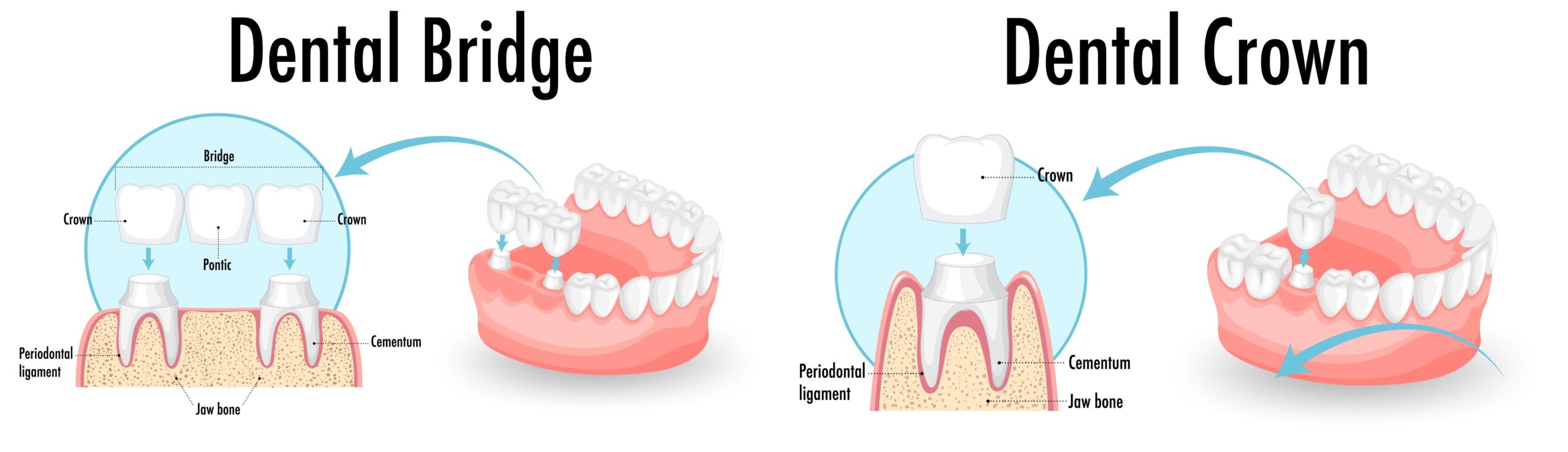
Crowns and Bridges (Kids)
Definition: Crowns and bridges serve similar purposes for both kids and adults—they restore damaged or missing teeth—but there are key differences in their use and application based on the age group.
Crowns
Purpose: Pediatric crowns primarily restore severely decayed or damaged teeth in children. They maintain the space for permanent teeth and ensure proper chewing and speech development.
Material: Stainless steel is commonly used for pediatric crowns, especially for molars, due to its durability and cost-effectiveness. Tooth-colored options like composite or zirconia crowns are available for more aesthetic concerns, particularly for front teeth.
Longevity: Pediatric crowns are temporary and will be replaced by natural permanent teeth as the child grows.
Procedure: The procedure for placing pediatric crowns is typically quicker and less invasive than for adults, focusing on minimizing discomfort and reducing the time the child spends in the dental chair.
Bridges
Purpose: Dental bridges for children, though less common, maintain space for permanent teeth if a primary tooth is lost prematurely.
Material: These bridges are typically made from metal or resin-bonded materials, balancing durability and cost.
Longevity: Like pediatric crowns, bridges for kids are temporary and meant to last until the permanent teeth come in.
Procedure: The procedure for placing bridges in children focuses on minimal discomfort and preserving as much natural tooth structure as possible, tailored to be child-friendly and quick.
Aftercare Instructions
- Soft Diet: Encourage a soft diet for the first few days after the procedure.
- Oral Hygiene: Help your child brush and floss around the crown or bridge.
Tips and Tricks
- Monitor Oral Hygiene: Ensure your child practices proper oral care.
- Avoid Sticky and Hard Foods: Encourage your child to avoid sticky and hard foods.
