

Home Care Instructions for Your Braces
Definition: Braces are orthodontic devices used to straighten and align teeth.
What to Expect
After we place your braces, you may experience some soreness in your teeth, and they may feel slightly loose. This is normal and is simply your body’s reaction to the pressure and movement of your teeth. Initially, we recommend eating soft foods such as soups, mashed potatoes, yogurt, smoothies, pasta, and rice until you feel comfortable eating harder foods. Over-the-counter pain killers suck as ibuprofen can help relieve some of the soreness.
Additionally, the inside of your cheeks may become irritated as the braces rub against your tissue while you talk and eat. To alleviate this discomfort, we will provide you with orthodontic wax to cover braces causing sore spots in your mouth. Everyone responds to treatment differently; it may take a few days to get used to the braces or a few weeks. Some people may not feel any discomfort at all after their braces are placed or during the entire treatment time.
Oral Hygiene
With braces, it is extremely important to brush after every meal (at least four times daily) for 3-4 minutes each time and floss every night. The most crucial time to brush is before bed. Be very thorough, spending at least 6 minutes brushing at this time because you are at a higher risk of developing cavities and white spot lesions while you sleep. Poor oral hygiene can lead to permanent white spots on your teeth, which require costly restorative treatment to repair once the braces are removed.
Flossing is essential as it removes food and bacteria between the teeth and under the gums that your toothbrush cannot reach. Without proper flossing, gingivitis can occur, leading to swollen, red, and easily bleeding gums. Untreated gingivitis can progress to periodontal disease, where bacteria start breaking down the ligaments that support the teeth, potentially leading to tooth loss. Gingivitis can also slow down treatment, as the infection blocks the roots of the teeth from moving freely through the bone. Regular dental check-ups and cleanings with your dentist are strongly recommended for the continued health of your teeth and gums.
Brushing Techniques
When using a power toothbrush, hold the brush head to one tooth at a time for 30 seconds, ensuring you clean all areas of the tooth and braces, including under the gums. Do not move the brush back and forth in your mouth; instead, let it rotate quickly to avoid missing areas of your teeth. Also, brush your chewing surfaces and the inside of your teeth, focusing on your gums.
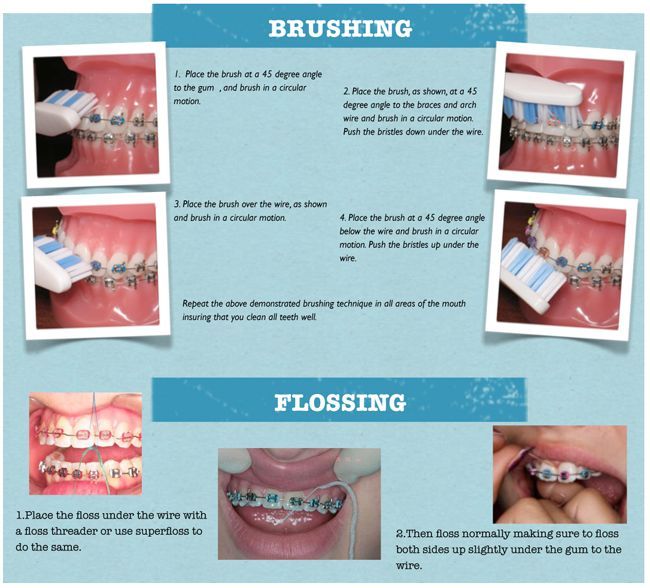
Using a manual toothbrush may be necessary after lunch at school or work. Manual brushing requires more effort. Angle your brush at a 45-degree angle towards your gum and gently but firmly brush your gum, then brush downwards to remove plaque at the gum line. Brush on top of the brace, underneath the brace, and make circular motions around the braces. Don’t forget the chewing surfaces and the inside of your teeth.
Flossing
Flossing is as important as brushing and removes bacteria that your toothbrush can’t reach. While it may be more challenging with braces, patience and effort will make it easier over time. Floss threaders aid in flossing by allowing you to get between the tooth and the wire. Push the floss away from your lip for the top teeth, drop the floss down underneath the wire, wrap it tight around both fingers of both hands, and gently floss both sides of each tooth, making a “C” shape around each tooth. Release the floss from one hand and repeat between each set of teeth.
Interdental Brushes
When a toothbrush is not available, interdental brushes can remove any food caught in the braces. They are not meant to replace brushing or flossing but to tide you over until you can brush and floss properly.
Eating with Braces
By being careful and using different techniques, you can eat most foods without damaging your braces. However, you should avoid certain foods that can break braces, as frequent breakages can hinder treatment progress.
Avoid hard and sticky foods such as:
- Hard and sticky candies
- Popcorn seeds
- Jolly Ranchers
- Nuts
- Starburst cubes
- Caramels
- Toffees
- Peanut brittle
- Gum containing sugar
You can eat hard foods like uncooked fruits and vegetables if you modify them. For example, cut apples into bite-sized pieces and place them towards the chewing surfaces. Avoid biting directly into anything hard. Remove corn from the cob before eating it. For meats on bones, remove the meat from the bone to avoid breaking braces. Cut foods with pits into smaller pieces to avoid biting into the pit.
Cooperation and Compliance
The success of your orthodontic treatment depends on your cooperation and compliance. Keeping your teeth and gums clean and healthy will keep your treatment on track. Avoid breaking braces or appliances regularly to ensure the success of your treatment. Follow instructions exactly if you need to wear elastics or other orthodontic appliances. If you have any problems or concerns, please call the office; we are here to make your orthodontic experience as pleasant as possible.
Root Resorption
During treatment, the tips of the roots of your teeth may become blunted or shortened. While some patients are prone to this, most are not. We will take X-rays during treatment to monitor for this. Short roots are generally not a disadvantage under healthy circumstances (good oral hygiene), but poor oral hygiene may shorten the life of the tooth.
Problems and Solutions
Loose Brackets or Bands
If a bracket or band comes loose, leave it in place if it is still attached to the wire. Place wax on the bracket if it causes discomfort and call the office to replace it.
Loose Wire
Try to place the wire back in with tweezers. Alternatively, you can try to clip the end of the wire with nail clippers. If neither option works, cover the end of the wire with wax and call the office to have the wire clipped.
Loose Tiewire or Elastics
If it causes discomfort, cover it with wax and call the office to have the elastics or ties replaced.
Loose Appliances
If it causes discomfort, cover it with wax and call the office to have the appliance repaired.
Soreness
Take paracetamol and use a warm saltwater rinse to promote healing. Note: Never use ibuprofen or any non-steroidal anti-inflammatory drugs (NSAIDs).
Tips and Tricks:
- Regularly check for loose brackets or wires and report them to your orthodontist.
- Use a fluoride mouthwash to help prevent cavities.
